
A Dairy-Free Menu That Feels Indulgent
All the flavor, none of the cream.
This is the menu for those who avoid dairy (for any reason), but still want Thanksgiving to feel indulgent, featuring a tea-rubbed turkey, wine-poached potatoes, and individual-sized focacce that are studded with olives and tomatoes. (It is not, however, vegan, as we do not have a recipe for vegan turkey stand-in.)

The Bird: Tea-Rubbed Maple Turkey
This aromatic, richly seasoned holiday turkey gets much of its flavor from lapsang souchong, a smoked black Chinese tea. We added the flavor in two layers. First, we used loose tea to make a flavorful rub for the meat. We then mirrored that flavor by using brewed tea as part of a rich maple glaze. To brew the tea, steep eight tea bags in ¾ cup boiling water; let sit until cooled, then squeeze out all the liquid from the tea bags. You should have ½ cup brewed tea. If using a frozen turkey, make sure it is completely thawed. And if your turkey has a pop-up thermometer, remove and discard it before rubbing the bird with the tea rub.

The Stuffing: Ayala Thanksgiving Stuffing
This recipe brings an herbaceous and garlicky zest to a classic Thanksgiving stuffing, perfectly balancing savory bacon, sausage, or mushrooms (and no heavy cream!). Though originally developed to be made with a specific seasoning blend, you can make your own by combining 5 bay leaves, 2 teaspoons dried rosemary, 1 tablespoon dried thyme and 1/2 teaspoon black peppercorns in a food processor. You also can prepare this recipe a day in advance. Store the unbaked stuffing in the refrigerator. Remove it from the fridge and bring it to room temperature, for about an hour. Bake as directed.

The Potatoes: Wine-Braised Potatoes with Garlic and Bay
These potatoes feel special enough for the holiday table, but aren’t weighed down with butter and heavy cream). The traditional way of cooking potatoes with these classic Portuguese flavors is to slow-roast them in the oven or long-braise them on the stovetop alongside meat. But in “Authentic Portuguese Cooking,” author Ana Patuleia Ortins includes a quicker, meat-free version that yields a wonderfully delicious side. We opted to use a mixture of wine and chicken broth for simmering (wine alone tended to toughen the exteriors of the potatoes).

The Sweet Potatoes: Citrus-Sesame Roasted Sweet Potatoes with Pistachios
This five-star, warmly spiced sweet potato dish takes inspiration from tzimmes, a classic Ashkenazi Jewish side of root vegetables and dried fruit, simmered together in orange juice. To facilitate caramelization and coax brighter flavor, we opt for roasting rather than stewing. The combination of sweet potatoes and shallots, studded with sweet-tart dried cherries, is both familiar and unique, especially when enhanced by coriander, caraway seeds and strips of orange zest. The finishing touches are a citrus-tahini drizzle and a smattering of vibrant pistachios, bringing nutty richness and crunch to each bite.

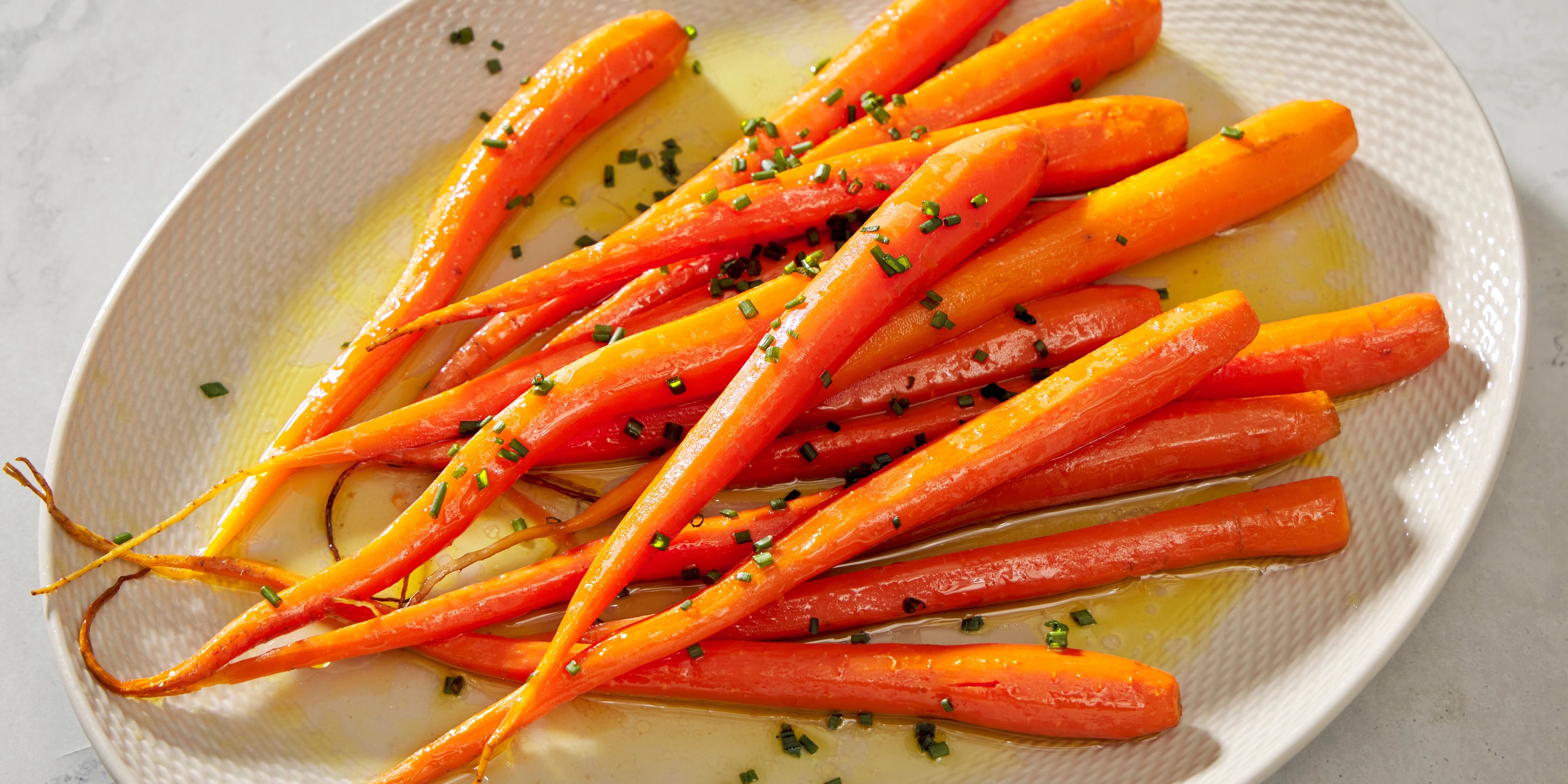
The Vegetable Side: Olive Oil–Poached Carrots with Honey and Ginger
Carrots generously slicked with olive oil and cooked in a moderately hot oven become velvety-tender and have pure, clean flavor. This technique uses less oil than true oil-poaching, but delivers similarly delicious results. We toss some ginger into the mix for warm spiciness, then finish the carrots with vinegar, honey and chives. The carrots are best served warm, but also are good at room temperature. They hold well in the foil-covered baking dish for up to an hour; when ready to serve, transfer them to a platter and finish them as the recipe instructs.

The Bread: Mini Focaccia with Tomatoes and Green Olives
This recipe recreates the light, open-crumbed focaccia we ate at Panificio Fiore in Bari, Italy, but in breads that are individually sized. To achieve that unique texture, the dough must be wet—so wet, in fact, it verges on a thick, yet pourable batter. Resist the temptation to add more flour than is called for. Shaping such a sticky, high-hydration dough by hand is impossible. Instead, the dough is gently scooped into oiled muffin cups; gravity settles it into an even layer. A baking steel or stone, heated for at least an hour prior to baking, is essential for developing golden brown bottom crusts. Castelvetrano olives are a mild, meaty, generously sized variety from Sicily; if they’re not available, any large, plump green olive will do.

The Dessert: Almond-Coconut Cake with Cherries and Pistachios
This rustic cake is our adaptation of a recipe from, “Honey & Co.: The Cookbook.” Dense, moist and filled from top to bottom with fruity, nutty flavor and texture, the cake is great as dessert, brunch or with coffee or tea. Honey & Co. flavors it with mahleb, a baking spice made from the seeds from a variety of cherry; we use easier-to-source almond extract. Store leftovers in an airtight container at room temperature for up to three days.
Join the conversation on Facebook, Instagram, TikTok and Pinterest.
And if you're looking for more Milk Street, check out our livestream cooking classes with our favorite chefs, home cooks and friends for global recipes, cooking methods and more.

Claire Lower
Claire Lower is the Digital Editor for Christopher Kimball’s Milk Street, with over a decade of experience as a food writer and recipe developer. Claire began writing about food (and drinks) during the blogging boom in the late 2000s, eventually leaving her job as a lab technician to pursue writing full-time. After freelancing for publications such as Serious Eats, Yahoo Food, xoJane and Cherry Bombe Magazine, she eventually landed at Lifehacker, where she served as the Senior Food Editor for nearly eight years. Claire lives in Portland, Oregon with a very friendly dog and very mean cat. When not in the kitchen (or at her laptop), you can find her deadlifting at the gym, fly fishing or trying to master figure drawing at her local art studio.

