
5 Myths About Italian Cooking
And recipes that set the record straight.
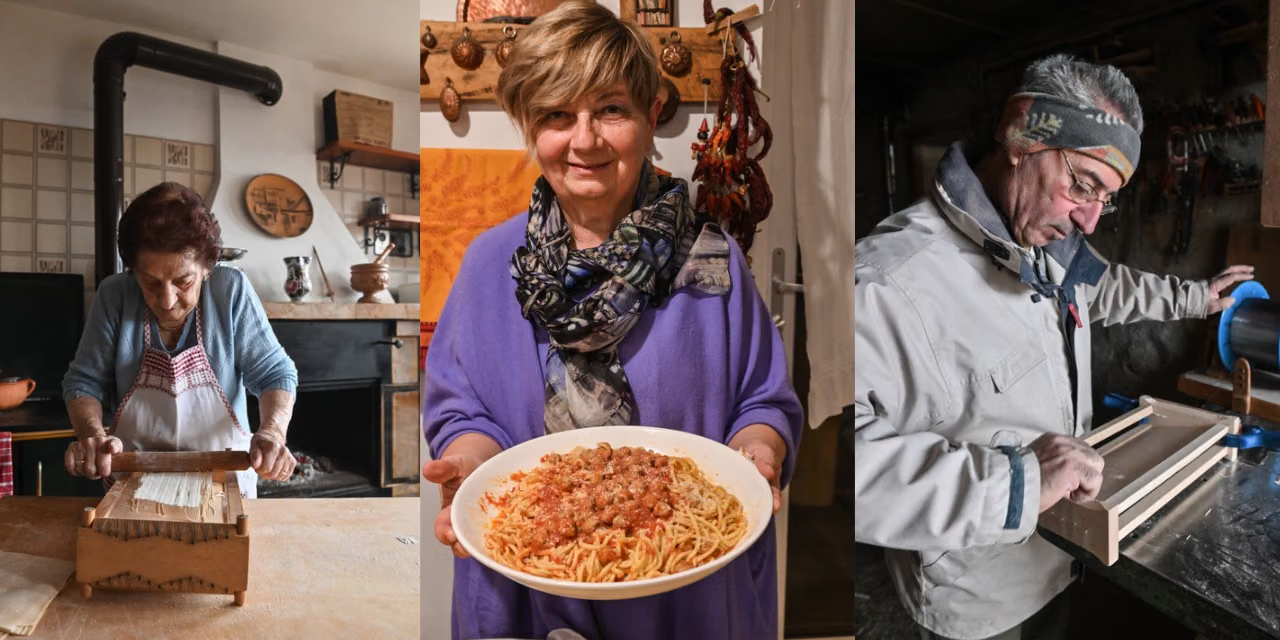
Italian-American food is (obviously) delicious, but it's distinctly different from the food that is cooked and eaten in Italy—and the cuisine varies greatly from region to region within the country. All of this can result in some confusion over what "real Italian" food is, so we went straight to the source: Italian cooks themselves. These are the five biggest myths about Italian cooking, with the recipes that set things straight.

Myth 1: Italians don’t eat spaghetti and meatballs
Italians do eat the red sauce joint classic, but the original version looks and tastes a little different. In towns across the Abruzzo region in central Italy, we learned to make a local specialty: pasta alla chitarra con pallottine, the ancestor of Italian American spaghetti and meatballs. Pasta alla chitarra, the pasta used in Italy, is a long strand shape that’s squared off instead of round like spaghetti, and the meatballs are marble-sized orbs that get tangled in the pasta and are so small they don’t require cutting (pallottine translates as “pellets” or “small balls”). Pasta alla chitarra is available in many supermarkets, but if you’re not able to find it, bucatini works nicely, as does spaghetti, but ideally, use a brand that is bronze die-cut, which leaves the noodles with a rough, porous surface that better grips the sauce.
Get the recipe.

Myth 2: Italians always use a heavy hand with garlic
A trip to Gragnano, a tiny hillside town in the shadows of rumbling Mount Vesuvius, disabused us of the idea that Italians use a ton of garlic in every single dish. At first we were puzzled when we watched Alfonso Cuomo of Pastificio Cuomo make a simple pasta sauce with sausage and broccoli. He began by heating a generous glug of olive oil in a skillet, then tossed in several whole cloves of garlic. A few minutes later, he threw them away, leaving just the oil in the pan, then used that oil to flavor the rest of the dish. Inspired by this lighter touch, we created a four-ingredient, 15-minute tomato sauce that mirrored his technique.
Get the recipe.

Myth 3: Eggplant parm is always fried
At the family-owned trattoria La Tavernetta Vittozzi in Naples, Anna Vittozzi taught us to make a lighter eggplant Parmesan that still was rich with cheese and tangy with tomato sauce. The secret? Skip the breading. With the more hands-off approach of roasting olive oil-brushed slices in the oven, we got a golden-brown, silky-textured eggplant, perfect for layering with a simple tomato sauce and fresh basil, plus plenty of cheese.
Get the recipe.

Myth 4: Fettuccine Alfredo needs cream to be creamy
In Rome, home cook Francesca Guccione taught us to make an Alfredo that was the opposite of the viscous, overly creamy version you often find in the States. It was light and silky, and relied only on fresh pasta, cheese, butter and salt. The key, we learned, was using high-quality ingredients and combining them in just the right way, and in just the right volumes. Back home, we developed a one-pan, no-drain technique utilizes the starchiness of cooking water to build the sauce.
Get the recipe.

Myth 5: Good tiramisù requires careful monitoring
This is unlike any tiramisù we’d ever encountered: lighter, no liquor, no cooking, and a shockingly minuscule amount of sugar.
We learned this from Linda Maria Botter of Camelia Bakery, in Treviso, where tiramisù was born; and hers was voted the best in the city. Many recipes start with cooking a zabaglione, a yolk-rich custard that requires careful monitoring, so it was a revelation that raw egg yolks and sugar simply whipped until voluminous make a lighter, better tiramisù. The lack of rum is not an oversight; it’s not common in Italy.
Get the recipe.
Join the conversation on Facebook, Instagram, TikTok and Pinterest.
And if you're looking for more Milk Street, check out our livestream cooking classes with our favorite chefs, home cooks and friends for global recipes, cooking methods and more.

Claire Lower
Claire Lower is the Digital Editor for Christopher Kimball’s Milk Street, with over a decade of experience as a food writer and recipe developer. Claire began writing about food (and drinks) during the blogging boom in the late 2000s, eventually leaving her job as a lab technician to pursue writing full-time. After freelancing for publications such as Serious Eats, Yahoo Food, xoJane and Cherry Bombe Magazine, she eventually landed at Lifehacker, where she served as the Senior Food Editor for nearly eight years. Claire lives in Portland, Oregon with a very friendly dog and very mean cat. When not in the kitchen (or at her laptop), you can find her deadlifting at the gym, fly fishing or trying to master figure drawing at her local art studio.

